





How Is KS Montessori Different From Other Childcares?
Choosing early childhood education is an important decision for families. Many parents today explore options beyond traditional daycare to find programs that support their child’s development in meaningful ways. At KS Montessori we follow the authentic Montessori philosophy, focusing on holistic growth, independence, and joyful engagement with learning. Montessori differs from other childcares in several foundational ways including learning approach, classroom environment, teacher role, and daily rhythm. These differences influence not only what children learn but also how they grow as confident and self-motivated individuals
Montessori Focuses on the Whole Child
Traditional daycare programs often prioritize supervision, safety, and basic developmental activities such as social play and motor skills. While these aspects are important, the core aim is generally to care for children during working hours.
Montessori programs like ours are intentionally educational from the earliest years. Learning is structured around real experiences that support intellectual, emotional, social, and physical growth. Children work with carefully designed materials and activities that foster problem solving, concentration, self-confidence, and independence. This approach reflects Montessori’s belief that education should help the whole child flourish, not just occupy time or manage behavior.
Key Comparisons Between Montessori and Other Childcares
Below we break down the major differences in formats that make Montessori education stand apart:

KS Montessori
- Child-led and self-directed learning
- Activities chosen by the child based on interest and readiness
- Prepared, educational environment with purposeful materials
- Teachers act as guides and observers
- Learning is individualized and paced to the child
- Mixed-age classrooms encourage peer learning
- Learning through discovery, repetition, and hands-on experience
- Emphasis on intrinsic motivation and independence
- Curriculum supports cognitive, social, and practical life skills
Typical Childcare
- Caregiver-directed activities
- Activities planned by adults for the whole group
- Play-focused environment with general toys
- Caregivers lead activities and supervise
- Learning is group-based and less individualized
- Children grouped by similar ages
- Learning through routine play and group activities
- Emphasis on engagement and participation
- Focus on care routines and play rather than curriculum
Prepared Environment Versus Play-Based Spaces
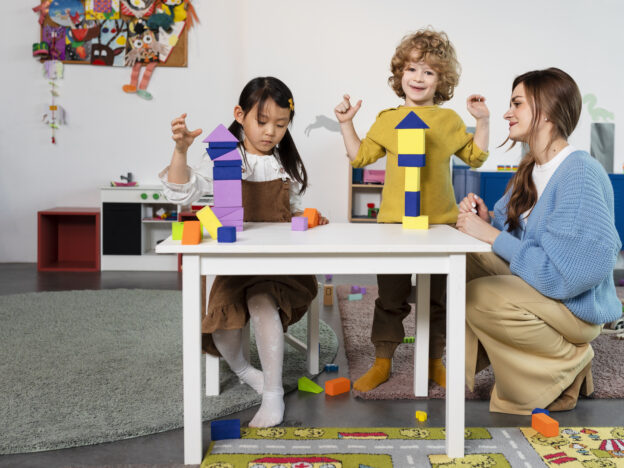
A Montessori classroom is known as a prepared environment where every element supports intentional learning. Materials are carefully selected to isolate specific concepts, are arranged on accessible shelves, and are designed to invite exploration. This environment encourages children to make purposeful choices, concentrate deeply, and develop self-control.
In many childcare settings classrooms are designed around general toys, play areas, and group activities. These spaces support social play and creativity but are usually not organized with a progression of concepts in mind.
Freedom With Responsibility
In Montessori settings children have freedom of choice within clear limits. They choose their work, move around the room independently, and engage deeply with materials for extended periods of time. This fosters self-regulation, intrinsic motivation, and personal responsibility.
In contrast, other childcare programs often follow a structured schedule set by adults. Transitions between activities, group routines, and schedules are typically imposed on all children at once. While this can support consistency, it gives less opportunity for children to pursue sustained engagement with work that interests them. (kvmontessoriacademy.com)

Montessori Teachers as Guides
One clear point of difference is the role of the adult. Montessori teachers undergo specialized training to understand how children learn and how to present materials in ways that support curiosity and mastery. These educators do not direct every moment but instead carefully observe and respond to children’s needs.
In many childcare settings the adult role includes directing activities, ensuring safety, guiding group play, and managing schedules rather than facilitating self-directed exploration. Montessori guides create an atmosphere where children can make choices confidently while receiving support that reflects their individual development. (International Montessori)
Mixed-Age Classrooms Support Social Growth
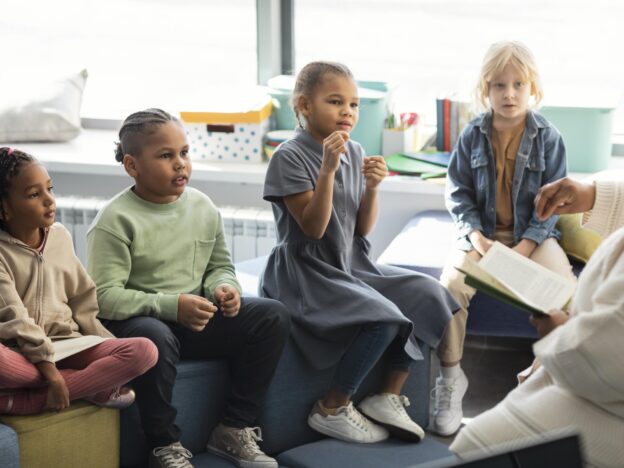
Montessori classrooms typically group children across a range of ages. Younger children learn from observing older peers and older children reinforce their own learning by modeling skills. This setting nurtures empathy, leadership, collaboration, and respect.
Other childcares usually group children by age with activities planned for the whole group at once. While this supports social interaction among peers of the same age, it does not provide the same structure for peer learning and mentorship.
Learning Materials and Hands-On Engagement
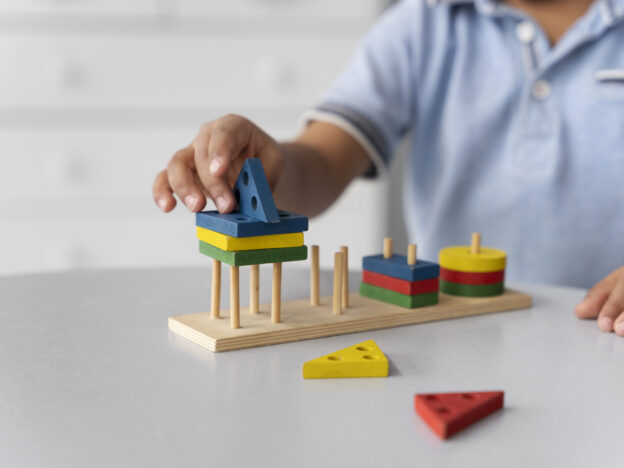
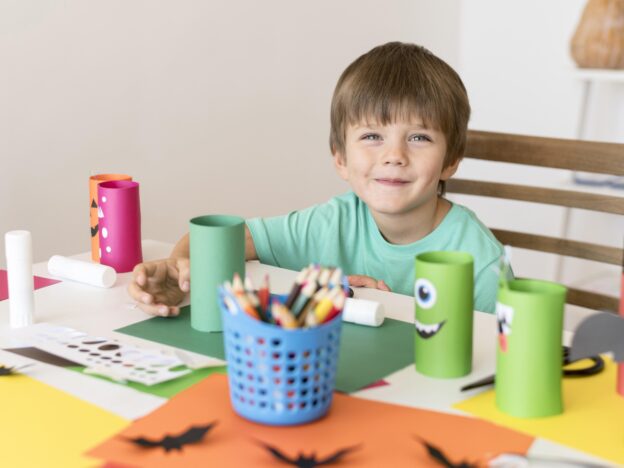
One of the most distinctive features of Montessori education is the use of specialized materials that encourage hands-on engagement and conceptual understanding. These materials are designed to be self-correcting which allows children to learn through independent exploration and build confidence in their abilities.
In many childcare settings, toys and materials are selected for general play and social interaction. These tools support creativity and social skills, but they may not always be structured to reinforce specific concepts sequentially or to support self-guided mastery of skills.
Longer Work Periods Encourage Deep Focus
Montessori classrooms support longer work periods where children can remain engaged with activities without interruption. These uninterrupted blocks of time foster deep concentration and sustained learning.
In contrast, childcare programs often organize children into multiple short activities throughout the day. Frequent transitions may interrupt focus and do not always allow children to complete tasks at their own pace.

What This Means for Your Child?
Choosing Montessori at KS Montessori means offering your child an experience that promotes independence, self-esteem, curiosity, and a love for learning. Children learn how to learn, not just what to learn. They develop practical life skills alongside academic foundations, and they grow socially and emotionally as part of a supportive community. This makes Montessori a distinctive and powerful alternative to traditional childcares for families who want more than supervision and routine play.