




10 Montessori-Inspired Phrases to Say Instead of “Good Job” (And Why They Work)
If you have ever spent five minutes around a toddler who just built a tower or buttoned their shirt, your natural instinct is probably to burst into applause and shout, “Good job!”
It’s automatic. We want our kids to feel loved, proud, and encouraged. But if you have spent any time exploring the Montessori approach, you have likely heard a surprising piece of advice: ditch the constant praise.
At first, this feels counterintuitive—maybe even a little cold. Why wouldn’t we want to praise our kids?
In Montessori education, the goal isn’t to stop encouraging children, but rather to shift from extrinsic motivation (doing things for external rewards and approval) to intrinsic motivation (doing things for internal satisfaction, curiosity, and pride). When we constantly say “good job,” we inadvertently train children to look to adults for validation rather than trusting their own feelings of accomplishment.
Here is a deep dive into why replacing “good job” matters, along with 10 practical, real-life Montessori phrases you can start using at home today.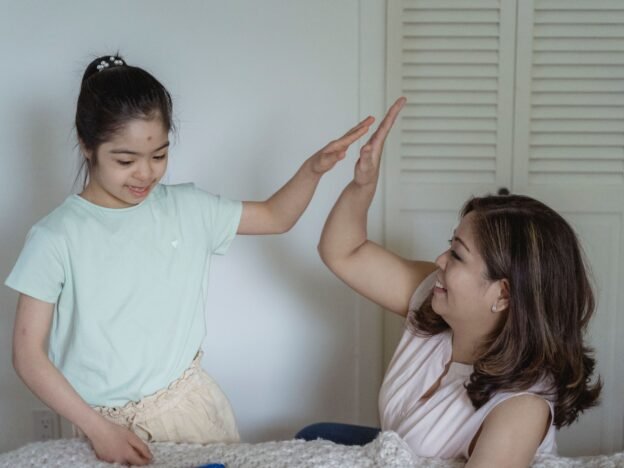
The Problem with “Good Job”
When “good job” becomes our default response, three main things happen:
-
It creates praise dependency: Children begin performing tasks to hear the phrase, rather than enjoying the task itself.
-
It shifts the focus to the outcome: “Good job” usually evaluates the final result (the clean room, the drawn picture) rather than the effort, concentration, or problem-solving that went into it.
-
It acts as a judgment: Even positive judgment is still judgment. It positions the adult as the judge of what is “good” or “bad.”
Replacing blanket praise with encouragement, descriptive observation, and objective feedback helps children develop deep self-reliance and genuine confidence.
10 Phrases to Use Instead of “Good Job”
Category 1: Acknowledging Effort & Process
1. “You worked on that for a long time!”
-
Why it works: It focuses entirely on their concentration and stamina. It teaches children that persistence and effort are valuable, regardless of how the final product turns out.
-
Best used for: Complex puzzles, building blocks, or intricate drawings.
2. “You kept trying, even when it was tricky.”
-
Why it works: This builds a growth mindset. It highlights their resilience and normalizes the idea that struggling through a task is a natural part of learning.
-
Best used for: Mastering a new skill like tying shoes, pouring water without spilling, or zipping a jacket.
3. “Look how many colors you used in this painting.”
-
Why it works: Instead of evaluating the artwork as “pretty” or “good,” you are simply observing it without judgment. This invites the child to talk about their choices.
-
Best used for: Art projects, craft activities, and creative play.
Category 2: Nurturing Internal Pride
4. “You look so proud of what you built!”
-
Why it works: This flips the mirror back onto the child. Instead of telling them how you feel about their achievement, you help them tune into how they feel about it.
-
Best used for: Completing a big structure, finishing a chore independently, or mastering a difficult milestone.

5. “How did you figure that out?”
-
Why it works: Asking open-ended questions invites reflection. It allows the child to articulate their problem-solving process and reinforces their confidence in their own critical thinking.
-
Best used for: Solving a puzzle, fixing a broken toy, or building a stable tower.
6. “Did you enjoy making that?”
-
Why it works: It places the value on the process of creation and the joy of doing, rather than the final visible result.
-
Best used for: Sensory play, baking, painting, or unstructured play.
Category 3: Focusing on Real-World Impact & Collaboration
7. “Thank you, that was really helpful.”
-
Why it works: In Montessori, children are viewed as capable contributors to the family community. Expressing genuine gratitude treats them with respect and acknowledges their practical effort.
-
Best used for: Practical life chores like setting the table, wiping up a spill, or putting away shoes.
8. “I noticed you put all the blocks back in their bins.”
-
Why it works: Descriptive feedback acts like a mirror. You are simply stating the fact of what they accomplished, which reinforces good habits through gentle recognition rather than gold stars.
-
Best used for: Cleaning up, organizing toys, or completing daily routines.
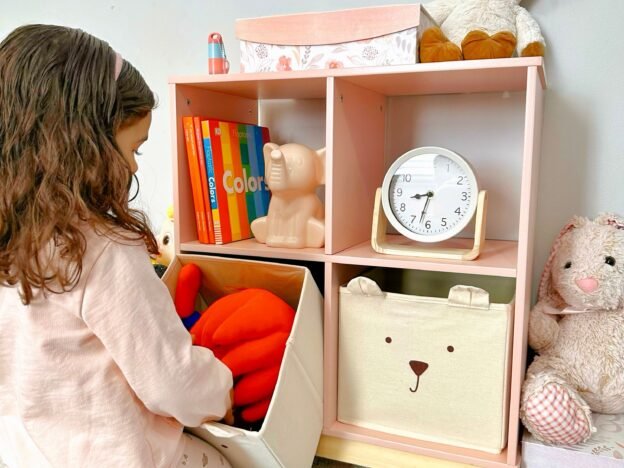
Category 4: Offering Objective Feedback
9. “You did it all by yourself!”
-
Why it works: It highlights autonomy and independence—core pillars of the Montessori philosophy. It helps toddlers recognize their growing capabilities.
-
Best used for: Putting on shoes, getting dressed, or climbing into a car seat independently.
10. [Say nothing—just offer a warm smile or nod]
-
Why it works: Sometimes, words get in the way. When a child is deep in concentration or feels quiet satisfaction after finishing a task, an adult’s comment can interrupt their thought process. A warm, quiet smile lets them know you see them without breaking their focus.
Quick Reference Table for Parents
| When your child… | Instead of saying… | Try saying… |
| Finishes a painting | “That’s such a pretty picture!” | “You used a lot of blue and red here. Tell me about it!” |
| Cleans up their toys | “Good boy/girl for cleaning up!” | “Thank you, putting the cars away keeps our rug safe to walk on.” |
| Finally zips their jacket | “Good job!” | “You kept trying with that zipper until it clicked!” |
| Shows you a completed puzzle | “Wow, you’re so smart!” | “You look really proud of finishing that tricky puzzle.” |
Making the Shift at Home
Transitioning away from “good job” takes time and practice. It is an automatic reflex for most of us, so don’t beat yourself up if it slips out!
When you catch yourself mid-phrase, simply add a descriptive observation: “Good job—you carried that glass with both hands so it wouldn’t spill!” Over time, the descriptive part will replace the reflex entirely.
By shifting from external praise to internal pride, you give your child a gift that lasts long past toddlerhood: the unshakable belief in their own capabilities.