




When a toddler builds a tower and watches it fall, or when a four-year-old pretends to run a bakery with imaginary dough, it can look like they are simply playing. But to a neuroscientist, a developmental psychologist, or a Montessori educator, something far more significant is happening. Play is not a break from learning — it is one of the most powerful forms of learning that exists.
In this post, we explore the science behind play-based learning, why it matters so profoundly during the early years, and how you can bring its benefits into your child’s everyday life — at school and at home.
Defining Play-Based Learning
Play-based learning is an educational approach in which children develop skills, knowledge, and understanding through play — both self-directed and guided. It is rooted in the idea that when children play, they are not wasting time. They are actively building the cognitive, social, emotional, and physical foundations they will need for the rest of their lives.
There are broadly two types of play-based learning
- Free play — completely child-led, open-ended, and unstructured. The child chooses the activity, sets the rules, and drives the experience.
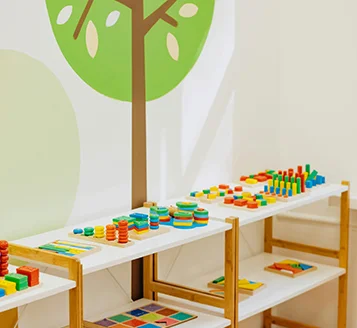
- Guided play — intentionally designed by an adult to support specific learning goals, but still child-led within that structure. Montessori materials are a perfect example of guided play.
What the Science Says: Play and the Developing Brain
- Play Builds Neural Architecture
In the first six years of life, the brain undergoes its most rapid development — forming over one million new neural connections every second. Play is one of the primary engines driving this development.
Research from the Harvard Center on the Developing Child shows that hands-on, interactive play experiences build the neural architecture that underlies executive function — the set of mental skills that includes working memory, flexible thinking, and self-regulation. These skills are stronger predictors of academic and life success than IQ alone.
Key finding: Children who engage in more play-based learning in early childhood show stronger executive function skills well into adulthood.
2. Play Activates the Whole Brain
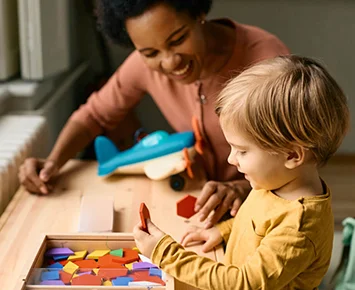
When a child plays — especially when using their hands — multiple brain regions activate simultaneously. The sensory cortex processes textures, shapes, and temperatures. The motor cortex controls the fine and gross movements involved. The prefrontal cortex engages in planning and problem-solving. The limbic system links the experience to emotion, making it memorable.
This whole-brain activation is why children remember things they have played with far better than things they have simply been told. The experience is encoded in multiple ways at once, making it richer and more durable.

3. Play Supports Language Development
Decades of research confirm that play — especially pretend play and play involving conversation — accelerates language acquisition. When children engage in role play, storytelling, or collaborative games, they practice vocabulary, narrative structure, turn-taking, and the art of making themselves understood.
Dr. Sandra Russ, a leading researcher in play and creativity, has shown that children who engage in rich pretend play have larger vocabularies, better storytelling ability, and stronger comprehension skills.
4. Play and Emotional Regulation
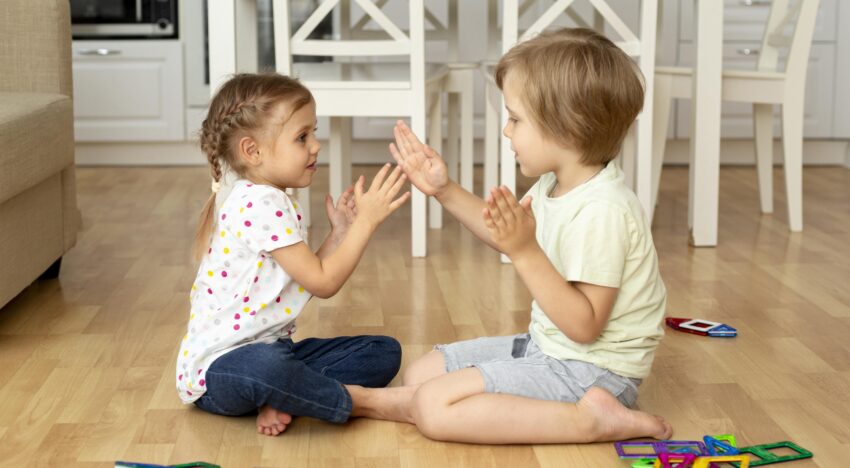
One of the most significant — and often overlooked — gifts of play is its role in emotional development. When children play, particularly in social settings, they repeatedly encounter frustration, negotiation, disappointment, and joy. Each of these experiences is a training ground for emotional regulation.
Children who have rich play experiences in their early years are better able to manage stress, tolerate frustration, and recover from setbacks. In Montessori terms, they develop what we call normalisation — a state of calm, focused, self-directed engagement that is the hallmark of a well-developed child.
5. Play Cultivates Creativity and Problem-Solving
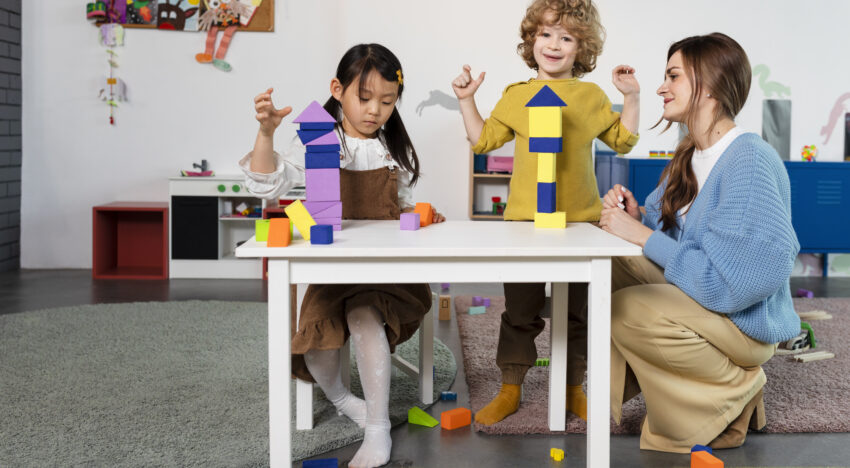
Open-ended play places children in the role of inventor. Without a script or a predetermined outcome, the child must generate their own ideas, test them, and adapt when things don’t work. This is the very definition of creative problem-solving — and it is a skill that no worksheet or instructional lesson can replicate.
Research from Cambridge University confirms that children educated in play-based environments demonstrate stronger creative thinking, more divergent problem-solving approaches, and greater intrinsic motivation to learn.
Play in the Montessori Method: Purposeful and Joyful
Dr. Maria Montessori understood the science of play intuitively long before modern neuroscience confirmed it. She called children’s engagement with Montessori materials ‘work’ — not to suggest it was laborious, but to honour the seriousness and intentionality with which children pursued it. To the child, this work is play. To the educator, it is structured learning.
Every Montessori material is designed to engage the child’s natural desire to explore, discover, and make meaning. The materials invite repetition, self-correction, and deep concentration — all hallmarks of the play state. There is no pressure to perform for an adult, no right answer to be given. The child works at their own pace, guided by intrinsic curiosity.
Montessori Materials That Bring Play-Based Learning to Life
If you would like to support your child’s play-based learning journey at home, we have carefully selected a range of authentic Montessori materials available in our online shop. Each one is designed to make learning joyful, tactile, and deeply engaging:
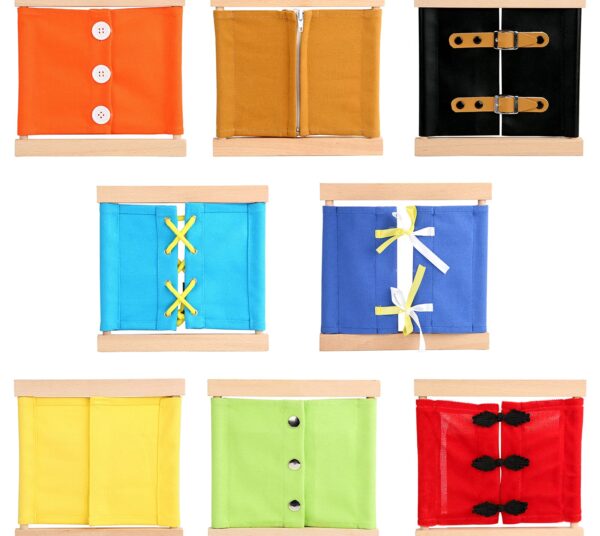
• Dressing Frame
Builds fine motor skills, hand-eye coordination, and independence through the deeply satisfying play of learning to button, lace, zip, and fasten — practical life at its best.
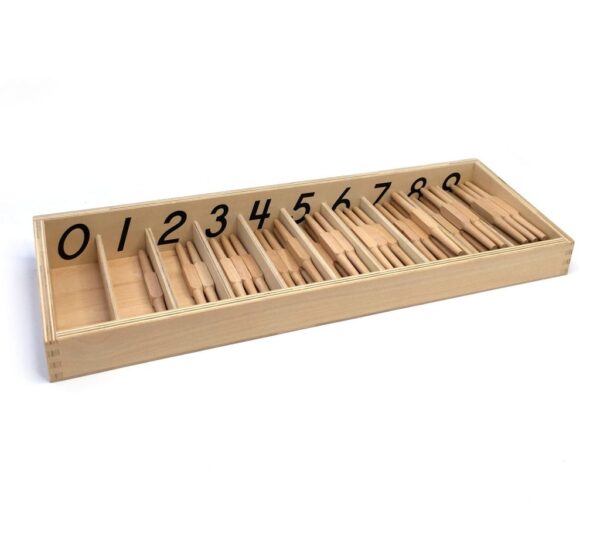
• Spindle Boxes
A hands-on introduction to the concept of zero and quantity. Children physically place spindles into compartments, making abstract numbers concrete, tactile, and meaningful.

• Metal Insets with Stand
Prepares the hand for writing through creative, playful tracing and filling activities. Children explore geometry while developing the pencil grip and wrist control they need for writing.
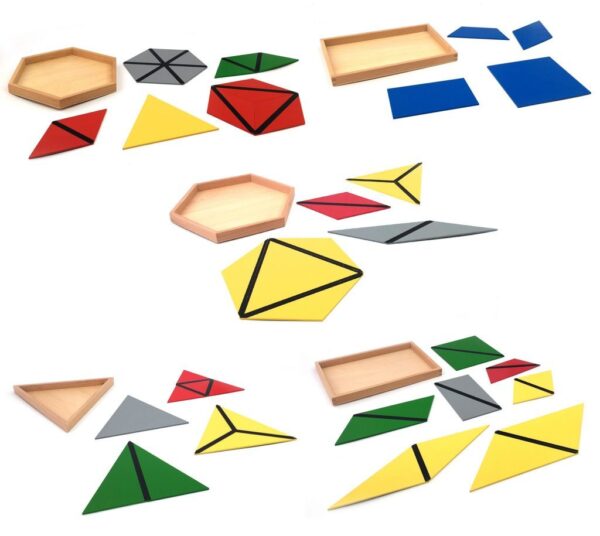
• Constructive Triangles —
Allows children to explore geometry through play, constructing squares, rectangles, and other shapes from triangles — building visual-spatial intelligence and early mathematical thinking
Each of these materials is crafted to support the exact brain-building, play-based learning described in this article — turning abstract concepts into tangible, joyful discoveries
How to Support Play-Based Learning at Home
You don’t need an elaborate setup to bring the benefits of play-based learning into your home. Here are some simple, research-backed principles to guide you:
- Prioritise open-ended materials — wooden blocks, loose parts, simple art supplies, and natural objects invite far more creativity than single-purpose toys
- Protect unstructured time — resist the urge to fill every moment with structured activities; free play is where children integrate everything they’ve learned
- Get out of the way — observe your child at play, but resist jumping in to direct or correct. The struggle is the learning
- Play alongside your child — parallel play with an engaged adult models curiosity and creativity without imposing direction
- Let them take things apart — deconstructing objects satisfies a deep cognitive drive and teaches cause and effect
- Connect play to real life — cooking, gardening, sorting laundry, and shopping trips are all rich play-based learning experiences